



If group bookings have ever felt overwhelming, you’re not alone.
Managing multiple travelers, navigating contracts, and coordinating countless moving pieces can quickly feel like a completely different business model. Because of that, many advisors hesitate to step into the group space.
However, avoiding groups also means missing out on one of the most scalable and profitable opportunities in your business.
That’s exactly why this conversation matters.
In episode 212 of TIQUE Talks, we sat down with Marilyn Cairo, Vice President of Sales for Groups at Classic Vacations and a hospitality sales leader with more than 30 years of experience. Marilyn has built her career by driving revenue through strategic partnerships and leading high-performing teams. As a result, she brings a level of insight that only comes from decades of hands-on experience in group travel.
In this blog, we’re breaking down the exact group travel booking steps she recommends so you can approach your next destination wedding or group trip with clarity and confidence.
Start With Strategy, Not Just Questions
First, you need to lead a strategic intake call rather than simply asking surface-level questions.
Too often, advisors treat this step like a checklist. Instead, you should approach it as an opportunity to position yourself as the expert. That means going beyond basic details and truly understanding your client’s motivations, preferences, and expectations.
You need to uncover whether the client already has a destination or resort in mind or if they are open to recommendations. At the same time, you should explore why a particular location matters to them and how flexible they are with travel dates. Most importantly, you must clarify the guest count in realistic terms rather than accepting inflated expectations at face value.
As Marilyn pointed out, “Everyone says they have 100 guests coming. 60% won’t.”
That insight should immediately shift your mindset. Instead of passively accepting what your client says, you need to guide them toward a realistic plan that sets the entire group booking up for success.
👉 If you want to structure this conversation more effectively, download the Sales Call Roadmap.
Next, Align the Experience With Logistics
Once you’ve gathered the right information, you need to align your client’s vision with real-world logistics.
At this stage, many advisors rush forward. However, slowing down here allows you to create a better overall experience.
You should carefully evaluate how accessible the destination is, including whether guests will need direct flights or connections. In addition, you need to consider the group’s demographics, such as whether families are traveling, what budgets look like, and how comfortable guests are with international travel.
Beyond that, you must assess the resort itself, including its size, amenities, and ability to host weddings or group events. Seasonality also plays a critical role. For example, choosing a Caribbean destination during hurricane season requires a very different conversation than booking during peak winter months.
Rather than simply agreeing to your client’s initial idea, you should guide them toward the best possible outcome. That may mean adjusting travel dates, recommending a different destination, or selecting a resort that better matches the group’s needs.
Ultimately, your role is not to say yes to every request. Your role is to lead with expertise.
Then, Request Proposals With Intention
After aligning on the right direction, you can move into the proposal phase. However, this step requires intention and precision.
Instead of submitting vague or overly optimistic requests, you should provide accurate guest estimates and include multiple date options in order of priority. This approach gives suppliers more flexibility and increases your chances of securing the best possible fit.
At the same time, you must confirm whether the wedding date has already been coordinated with the resort. Many advisors overlook this detail, but it is critical because room availability and event space availability operate separately.
If those two elements do not align, you risk losing your preferred setup entirely. By approaching proposals strategically, you reduce delays, eliminate confusion, and strengthen your position as a professional.
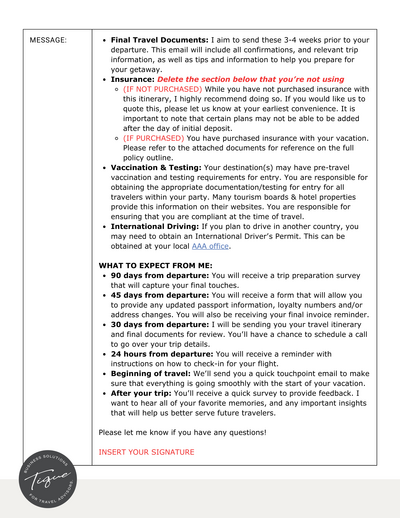
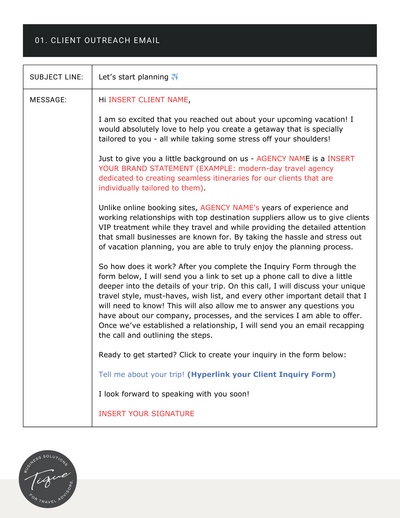
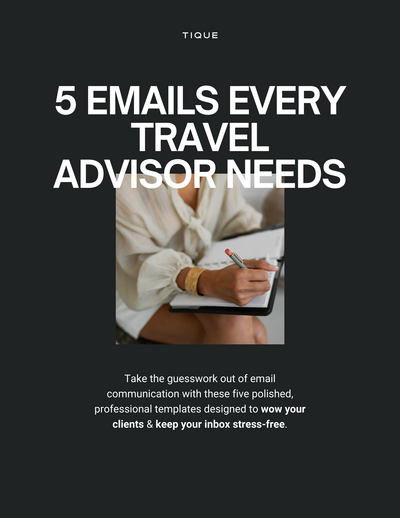
Tired of rewriting the same email for the 100th time? We got you.
Now, Handle Contracts Like a Business Owner
Once your client selects a proposal, the process becomes more serious.
At this stage, you will receive a contract, and it is essential to treat it as a legal document rather than a formality. You are responsible for reviewing every detail, understanding the terms, and ensuring you are fully aware of your obligations.
This includes paying close attention to attrition clauses, payment deadlines, and cancellation penalties. Each of these elements carries financial implications, especially in group bookings.
Even more importantly, you must protect your business before signing anything.
You should always have a signed client agreement in place before you sign a supplier contract. Without that layer of protection, you assume full liability for the group. In high-volume bookings, that risk can escalate quickly and create serious financial consequences.
Approaching contracts with a business-owner mindset ensures that you protect both your clients and your company.
Clarify Roles Early to Avoid Burnout
As the planning process continues, clearly defining roles becomes essential.
Without that clarity, clients may expect you to manage elements that fall outside your scope, which leads to confusion and burnout.
Your responsibility centers on travel logistics. That includes coordinating guest bookings, managing room blocks, handling communication, and acting as an advocate for your client when needed. Our Standard FIT Client Communication Templates give you ready-to-use emails for the communication that comes with every booking.
In contrast, the resort’s event team is responsible for executing the wedding or event itself. They handle the ceremony setup, décor, food and beverage, and the overall event timeline.
While these roles intersect at certain points, they are not interchangeable. By maintaining clear boundaries, you ensure that each part of the experience runs smoothly and that you can focus on delivering the highest level of service in your area of expertise.
Leverage Technology to Scale, Not Struggle
As your group bookings grow, efficiency becomes increasingly important.
Managing everything manually may seem manageable at first, but it quickly becomes overwhelming as the number of travelers increases. Instead, leveraging the right technology allows you to scale without sacrificing quality.
By using group booking platforms, you can create customized booking websites where guests can independently select rooms, make payments, and manage their reservations. At the same time, you gain access to dashboards that allow you to track deposits, monitor inventory, and oversee the entire group in real time.
This shift transforms your role. Rather than responding to every individual request, you oversee the process strategically while your systems handle the repetitive tasks.
As a result, your business becomes more efficient, more scalable, and far less stressful.
Use Concessions Strategically, Not Emotionally
Concessions can add value to a group booking, but they should never be the foundation of your sales strategy.
Resorts may offer perks such as complimentary rooms, upgrades, or private events based on the size and timing of the group. However, these benefits are not guaranteed and often depend on performance metrics outlined in the contract.
For that reason, you should focus on presenting the core value of the experience first. Then, you can explore opportunities for additional perks behind the scenes.
When possible, delivering these concessions as a surprise enhances your client’s experience and reinforces your value as an advisor.
By managing expectations carefully, you create a stronger and more positive overall impression.
Finally, Expect Challenges and Lead Through Them
Even with a strong process in place, group bookings will never be completely seamless.
Guests may have last-minute questions, plans may shift, and external factors such as weather can impact the experience. These challenges are part of working with larger groups.
However, when you set clear expectations from the beginning, communicate consistently, and partner with reliable suppliers, you position yourself to handle these situations effectively.
More importantly, you build trust with your clients by guiding them through uncertainty with confidence.
Group bookings do require more responsibility. That part is unavoidable.
However, they also create significant opportunities for growth. They allow you to increase your revenue, strengthen client relationships, and generate repeat and referral business at a higher level.
Once you understand and implement the right group travel booking steps, the process becomes far more manageable. Instead of feeling overwhelmed, you gain control, and with that control comes the ability to scale.







Comments +